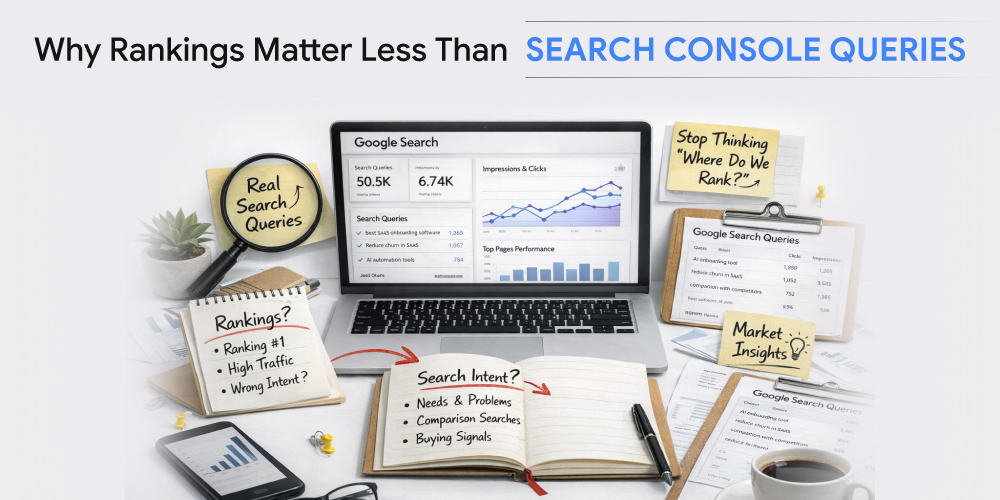
For years, search engine rankings have been treated as the ultimate benchmark of SEO success. Founders frequently ask, “Where do we rank on Google?” because ranking positions feel measurable and concrete. A higher position suggests visibility, authority, and growth.
However, rankings alone do not reveal intent.
What truly matters is not just where your website appears in search results, but why it appears. The deeper insight lies in understanding the exact search queries that led users to your website. This is where Google Search Console becomes significantly more powerful than a ranking report.
For tech founders, SaaS companies, and startup leaders, the difference between tracking rankings and analyzing queries can define the difference between surface-level SEO and strategic growth.
Rankings Create a False Sense of Clarity
When founders focus only on keyword positions, they often assume that higher rankings automatically translate into meaningful growth. But a strong position for a broad, high-volume keyword does not guarantee relevant traffic or qualified leads.
A website might rank on page one for a popular term and still attract users who have no real buying intent. At the same time, a page ranking slightly lower for a specific, high-intent query may generate stronger conversions and better business outcomes.
The issue is that rankings measure visibility, not motivation.
They do not explain what users were searching for when they found you. They do not reveal whether the searcher was researching a problem, comparing competitors, or preparing to make a decision. They do not show how your audience naturally describes their challenges.
Without examining search intent, startups risk optimizing for impressive-looking metrics instead of meaningful demand. This often leads to content strategies built on assumptions rather than real user behavior.
In this way, rankings can create an illusion of SEO progress while masking missed opportunities.
Let Google Search Console Reveal Real Search Behavior
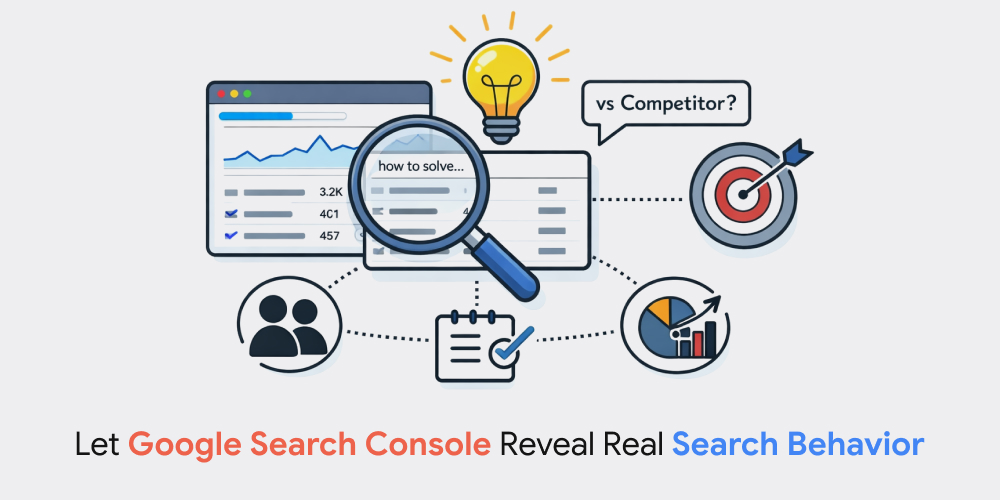
Google Search Console queries provide direct access to real search behavior. Every query listed represents a person actively searching for something specific. These are not theoretical keywords generated by tools. They are real expressions of interest, need, or evaluation.
When founders begin to analyze search queries instead of just positions, they gain access to powerful market intelligence.
Patterns begin to surface. You may notice repeated phrases around a specific feature or use case. You may discover that users frequently search comparisons between your brand and competitors. You may observe growth in branded search terms, signaling increasing trust and awareness.
These insights connect SEO performance with business strategy.
Search Console also highlights potential language gaps. The terminology used internally by a startup may differ from the language users type into Google. If your website speaks in technical product terms while users search using problem-focused language, that disconnect can weaken both visibility and conversions.
Understanding search queries helps align:
- Product positioning
- Website messaging
- Content strategy
- User intent
- Organic growth planning
Additionally, Search Console reveals which pages Google consistently surfaces for multiple queries. These are signals of topical authority and emerging trust. Strengthening these pages often produces more impact than continuously creating new content without strategic direction.
Over time, analyzing queries instead of obsessing over rankings transforms Search Console into a business intelligence system rather than just an SEO dashboard.
Conclusion
Rankings show where you stand. Search queries show what people want.
For founders building long-term organic growth, understanding search intent is more valuable than monitoring position changes. Google Search Console provides a direct window into how your audience searches, how Google interprets your brand, and where demand is forming.
Instead of asking only, “Are we ranking higher?” begin asking, “What are people searching before they find us?”
Open the Queries report in Google Search Console and read it carefully. Look for patterns. Identify intent. Notice language alignment. Treat search data as market feedback.
Because sustainable SEO growth is not built on rankings alone.
It is built on understanding real search behavior, responding to user intent, and aligning your startup with actual demand.
If you want to move beyond ranking reports and start reading Google as a growth signal, let’s connect. We help founders turn Real Queries, Trust Pages, and Position Gaps into measurable organic growth.
So if you’re looking for SEO experts who can deliver real value to your business, connect with Rank The Page today.
About author

rankthepage
At Rank The Page, we’re committed to providing the right digital support and guidance needed for your business to thrive. We’re a team of enthusiast digital marketers and other professionals working together to drive more traffic to your website and solidify your brand reputation.